2.5D: 2D Gameplay, 3D Rendering, 1000+ Enemies

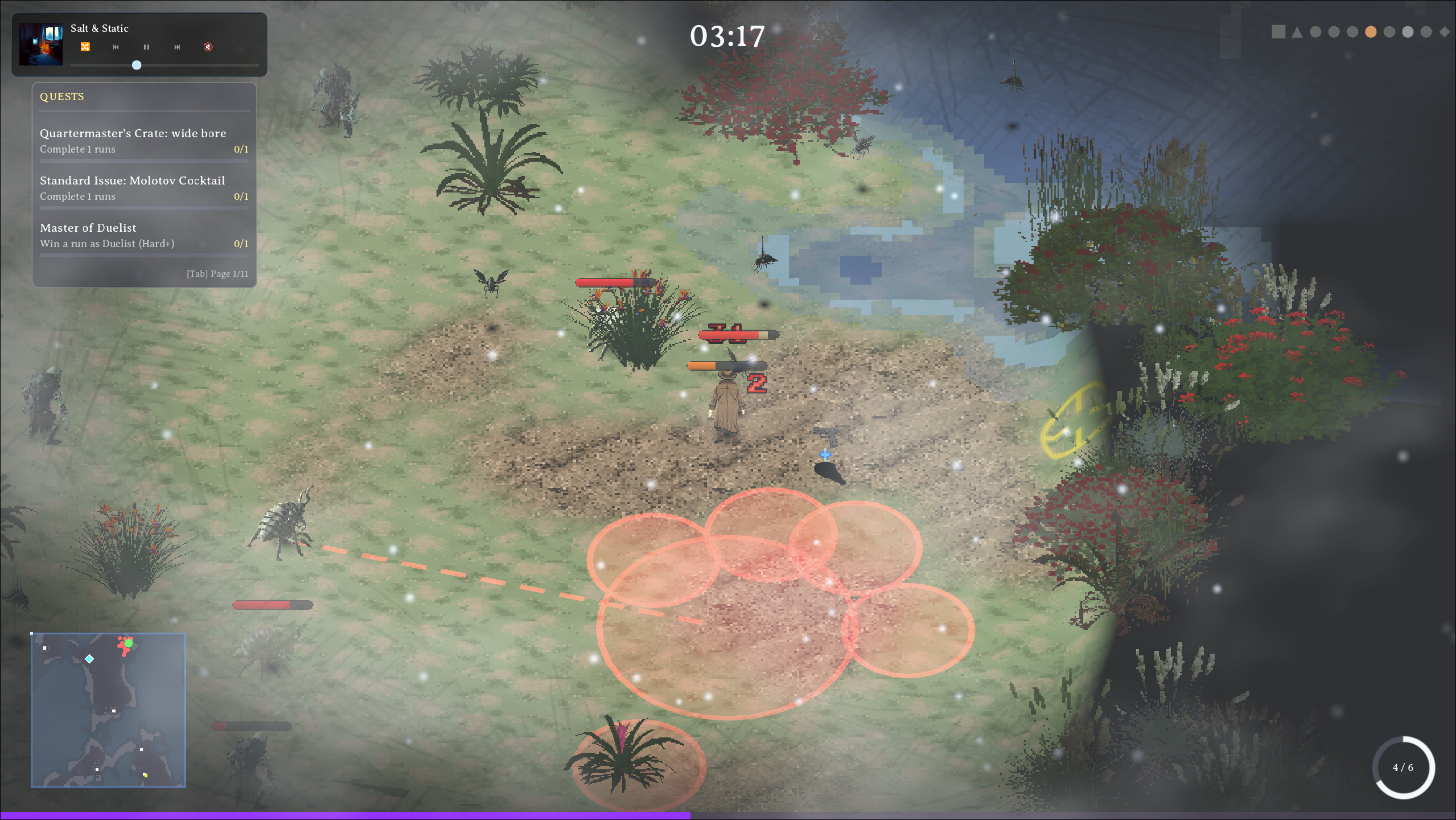
I promised last time I’d write up the rendering trick that lets the Godot port of DET-33 push far more enemies than the JS version. Here it is, and it’s a little unusual: the game runs its logic in 2D and its rendering in 3D. Why split them A top-down bullet-hell wants to look 2D, and all the gameplay genuinely is 2D. Physics, collision, movement, combat, skills, traps, and the entire map-generation pipeline stay in 2D where they’re simple to reason about. But drawing a thousand individual 2D sprites means a thousand draw calls, and culling what’s behind a wall means doing visibility checks on the CPU. Both were exactly the costs that capped the JS build. ...
June 20, 2026 · 3 min

Carving Terrain Like Water

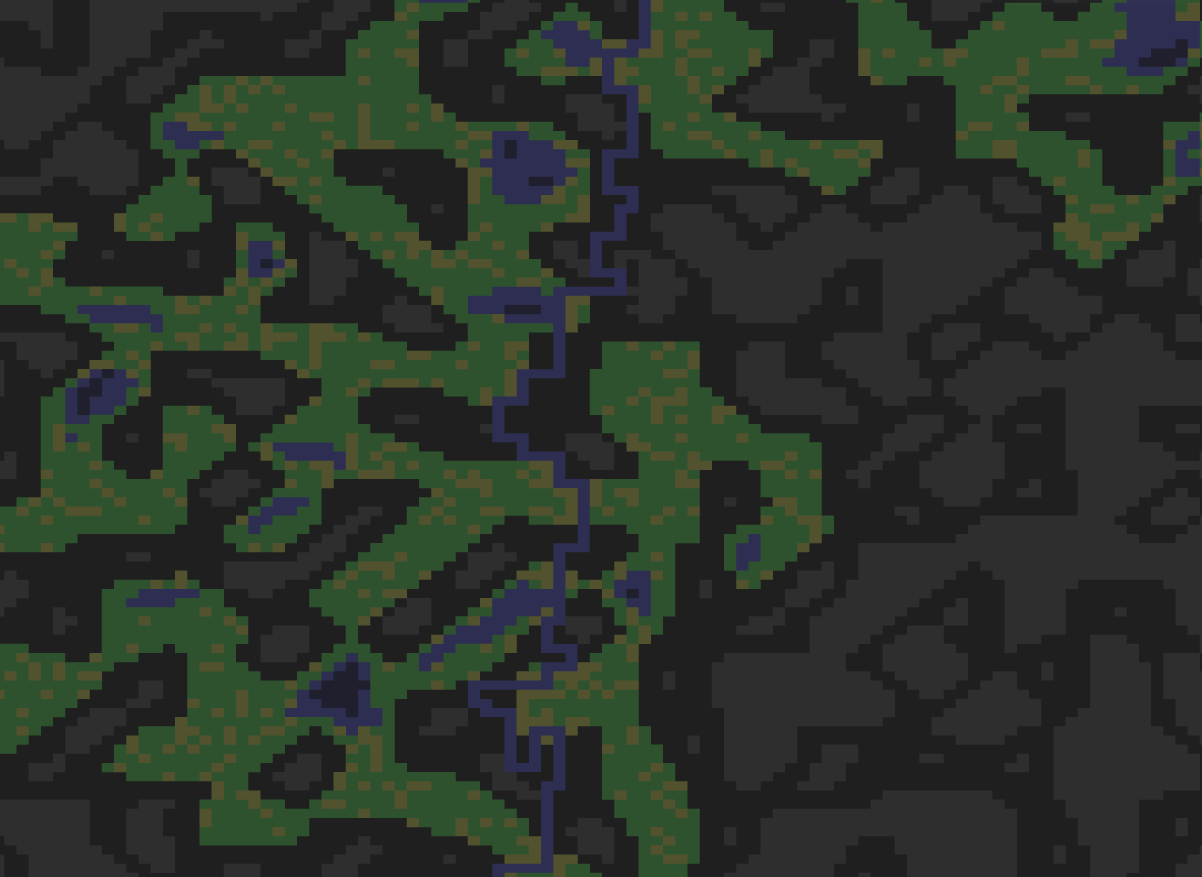
A few years back I wrote a handful of posts about faking water on top-down maps: generating 2d rivers, cliffs, and an exhumed river channel. Those one-off experiments eventually grew into a proper map library I’ve been maintaining called compass. Revisiting them now is fun because real-world geology already solved the “make it look natural” problem ages ago. I just borrow the names and loosely approximate the process. Here are three of the fluvial generators and how they actually work. ...

February 18, 2024 · 3 min

Kepler452b Coming 2020

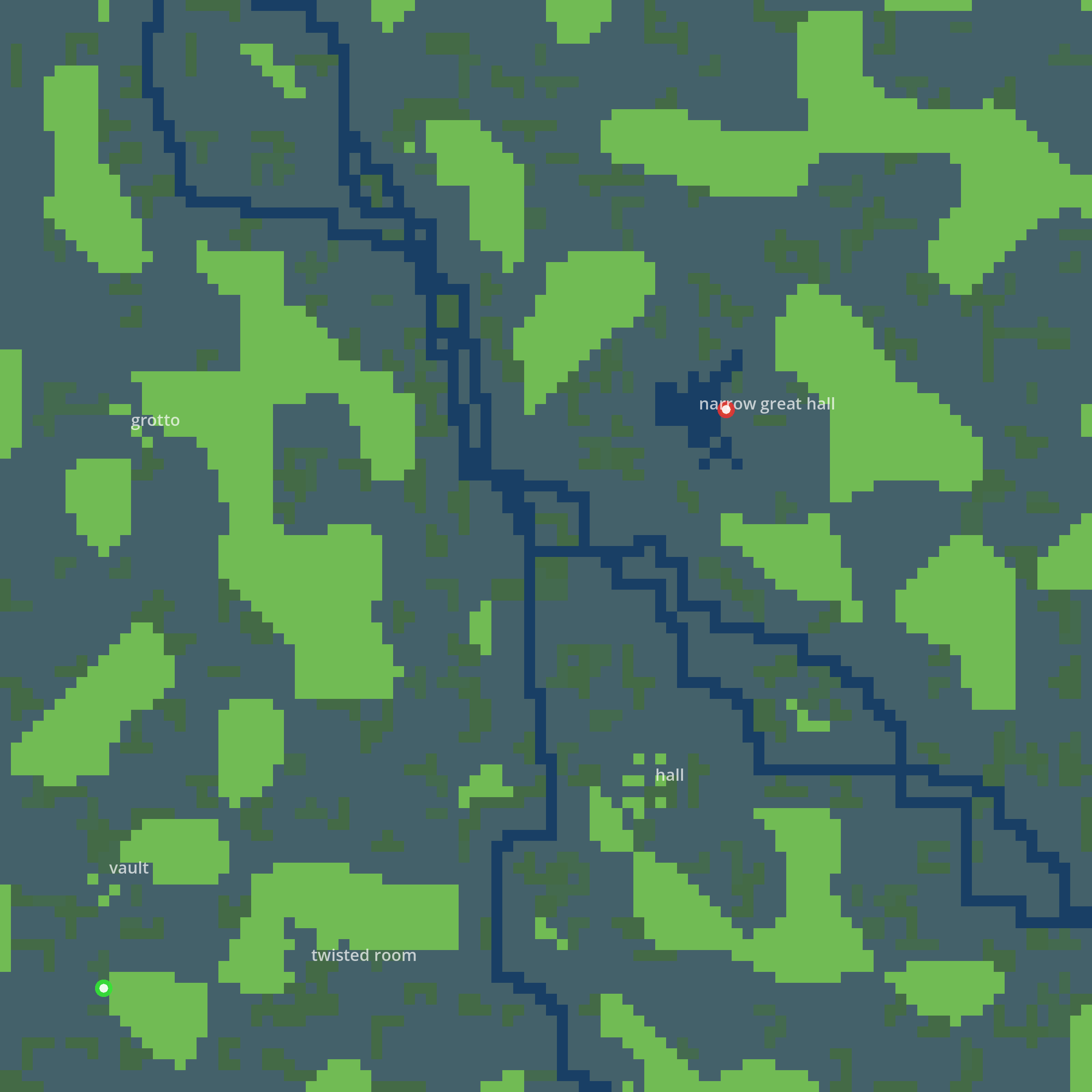
August 4th, 2020 Update: v1.0.0 Release Official release page is here. You can submit bugs or request features here. Downloads & Links Windows Download Mac Download Linux Snapfile Download Linux App Image Download Screenshots ...

December 3, 2019 · 2 min

Meander Algorithm

The meander algorithm is a combination of using mazes to allow a meandering with bresenhams line. Below you can see the actual algorithm in simplicity. Obviously you could use noise maps to created heighted terrain based on the river to make it look pretty. Choose a starting map edge and ending map edge, acquire the terminal points based on those edges. Usually this would be a random point on those edges. Maybe you’d want to weight it so it’s predominately in the center, or you could restrict it to a certain part. Create Bresenhams line between the terminal points. This is called the pathing vector. Break up the pathing vector into chunks of 9x9 where the pathing vector crosses the center. There may be left-over of the pathing vector. For each chunk, perform a recursive maze generation algorithm on the chunk. Repeat this step until there is a path from the start of the pathing vector within the chunk to the end of the pathing vector in the chunk. A* pathing algorithm can be used for the pathing. Merely use Bresenhams line to wrap up the extraneous pathing vector not covered by chunks, alternatively break up the remaining path into the largest odd number and chunk and process it similarly to the previous part of the algorithm to make it more consistent. Left overs in this optional way would still be filled in with bresenhams line. Recursive Maze Generation: ...

September 4, 2018 · 2 min

Generating Exhumed River Channel

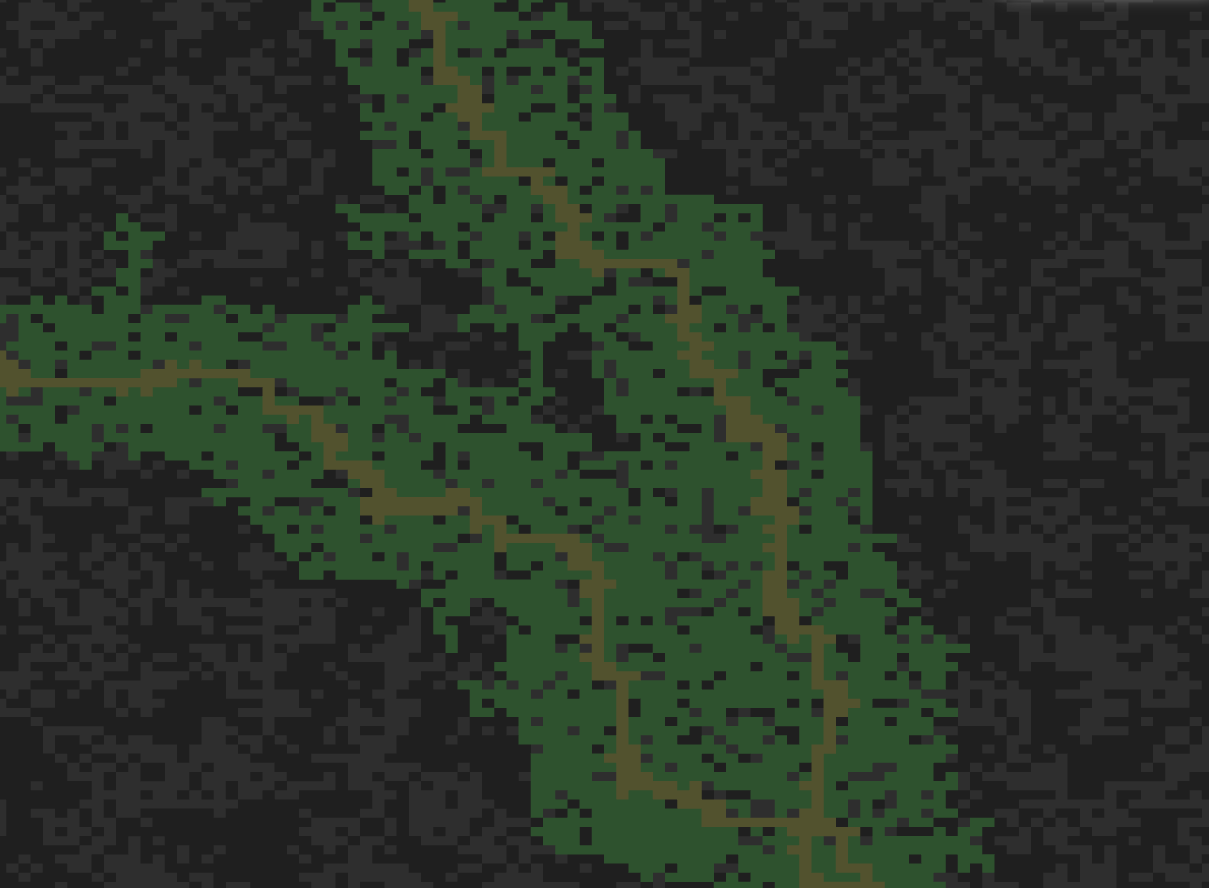
I recently did some work in generating rivers in a 2d game. Revisiting this work to create an exhumed river channel, I decided it might be fun to revisit how to generate it to make the channel look more realistic. Instead of using a drunken walker, this is a more expensive but interesting map generator: Start by generating 2d simplex noise where less <0.6 is floor rest is walls Generate terminal lines at each map exit (north, south, east, west). Shuffle those lines and randomly choose a start and end location for the river based on two of those lines. Later you can add another line with terminal point to allow a split river channel ...

August 6, 2018 · 1 min