2.5D: 2D Gameplay, 3D Rendering, 1000+ Enemies

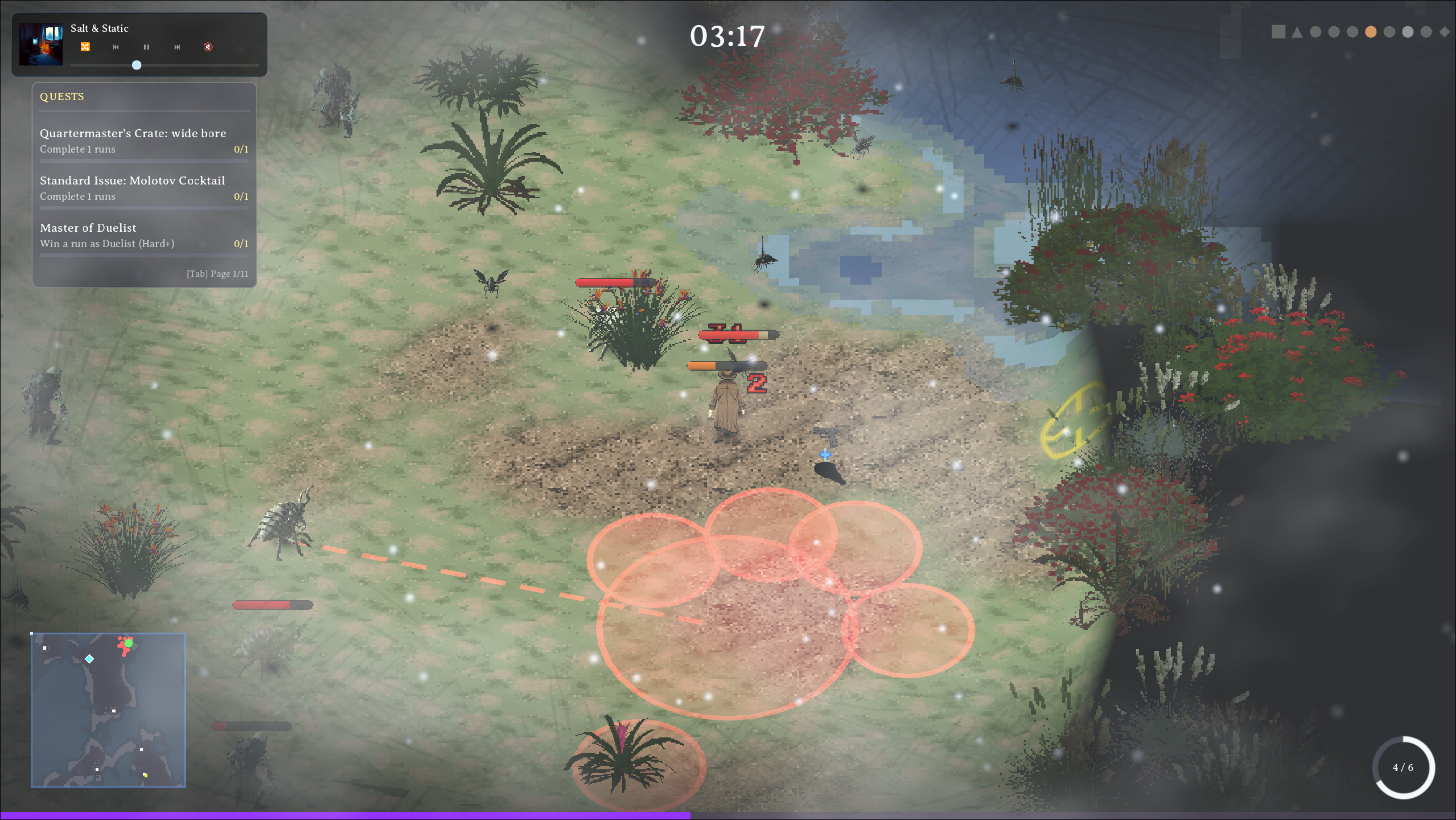
I promised last time I’d write up the rendering trick that lets the Godot port of DET-33 push far more enemies than the JS version. Here it is, and it’s a little unusual: the game runs its logic in 2D and its rendering in 3D. Why split them A top-down bullet-hell wants to look 2D, and all the gameplay genuinely is 2D. Physics, collision, movement, combat, skills, traps, and the entire map-generation pipeline stay in 2D where they’re simple to reason about. But drawing a thousand individual 2D sprites means a thousand draw calls, and culling what’s behind a wall means doing visibility checks on the CPU. Both were exactly the costs that capped the JS build. ...
June 20, 2026 · 3 min

Building a Modern Roguelike in 2019

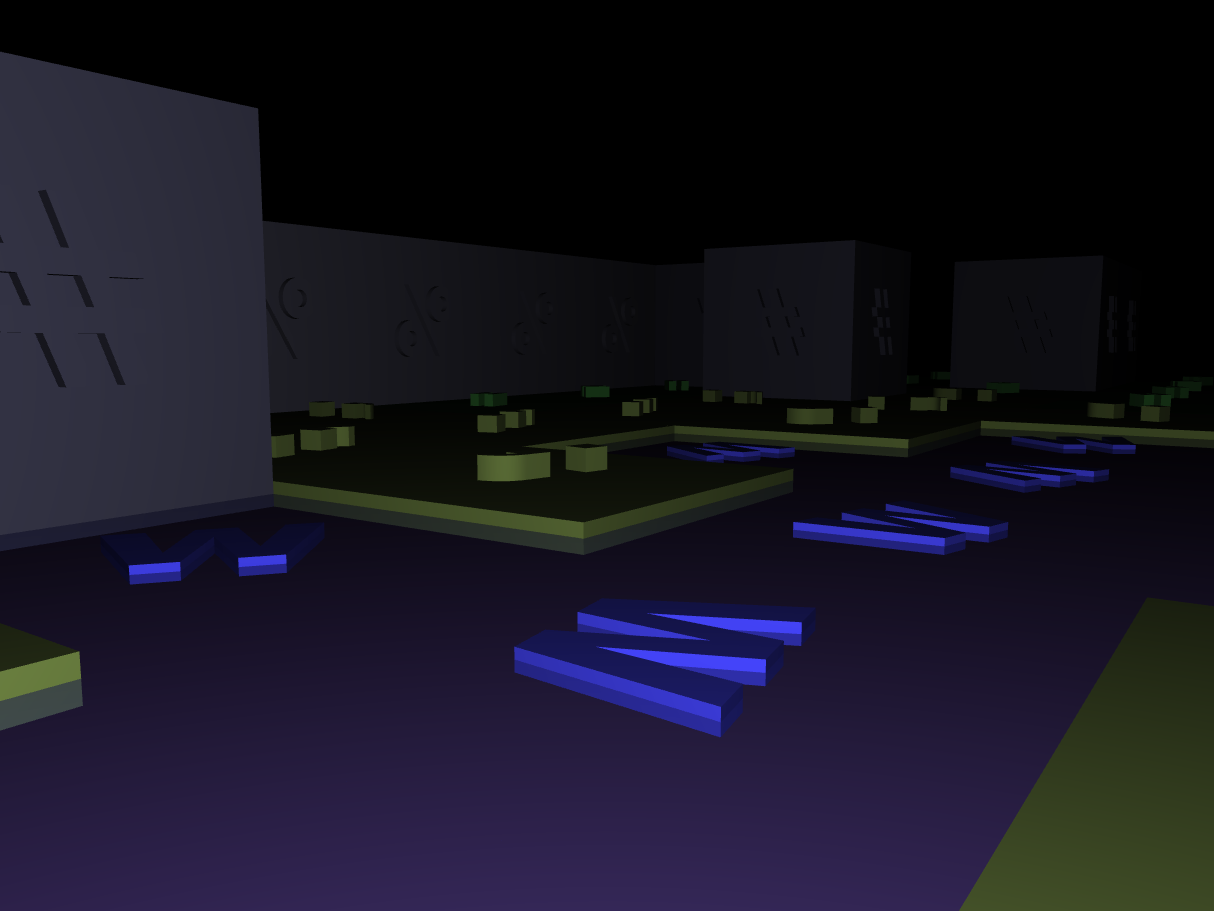
At numerous times I’ve created demos trying to figure out how to merge a traditional roguelike into a FPS without sacrificing it’s roots. Here’s an article I made in 2017. Unlike many others I don’t feel like just random maps makes a roguelike, I’ve even gone so far as saying no FPS is a roguelike. In this experiment I’ve tried to merge those ascii characters into the map itself and dropped the textures. The code can be executed and ran or viewed in its entirety on Github here. ...

November 13, 2019 · 1 min

Textures make a difference

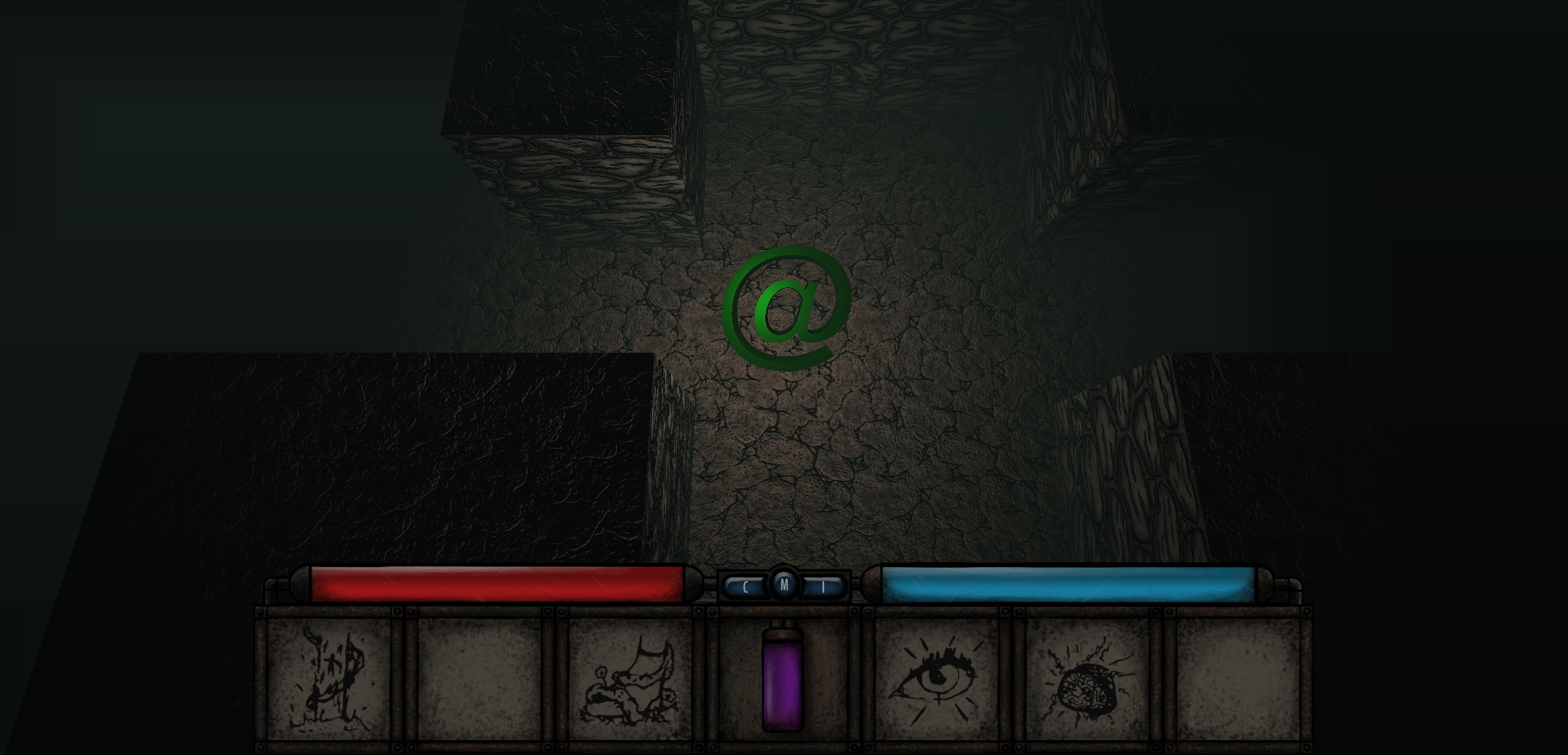
I’ve been playing around with textures in exploring the bleak to see how much of a difference it would make. Essentially I’m torn between two ideas: Make the floors all a plain color and glow them based on the environment color so as not to be too realistic and keep a more roguelike feel. Struggle with having textures that blend together between sectors so it has a more natural feel albeit simple in perspective to traditional 3d games. At the moment I’m leaning towards number two, but I haven’t been able to reproduce a reliable glow postprocessing effect that I actually like and that feels natural. I’ll follow down both roads further before making a discrete decision. ...

March 22, 2017 · 1 min