Procedural Levels with Compass

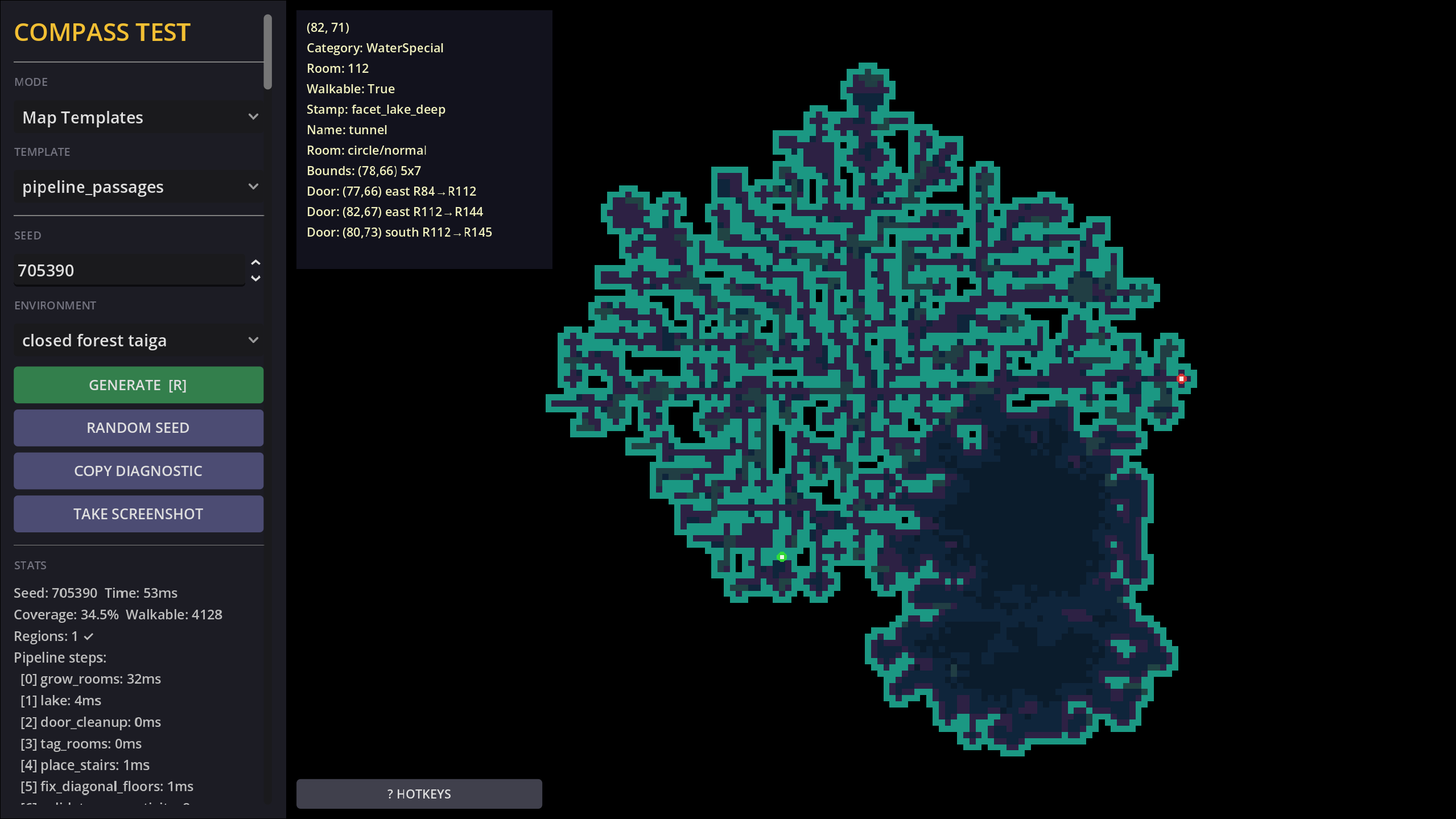
I spent a good chunk of last year writing about compass, the map-generation library with all the fluvial generators and cellular caverns. The whole time I was building it as a standalone library, the real motive was to eventually drop it into a game. This month I finally did, and DET-33 now generates every one of its floors through compass. Pulling the library in Wiring it up was almost anticlimactic, which is the point of having spent the time on the composition layer. DET-33 pulls compass in as a git dependency and the level code just imports the scanning digger and the template data: ...
December 21, 2025 · 3 min

Composition Over Configuration in Compass

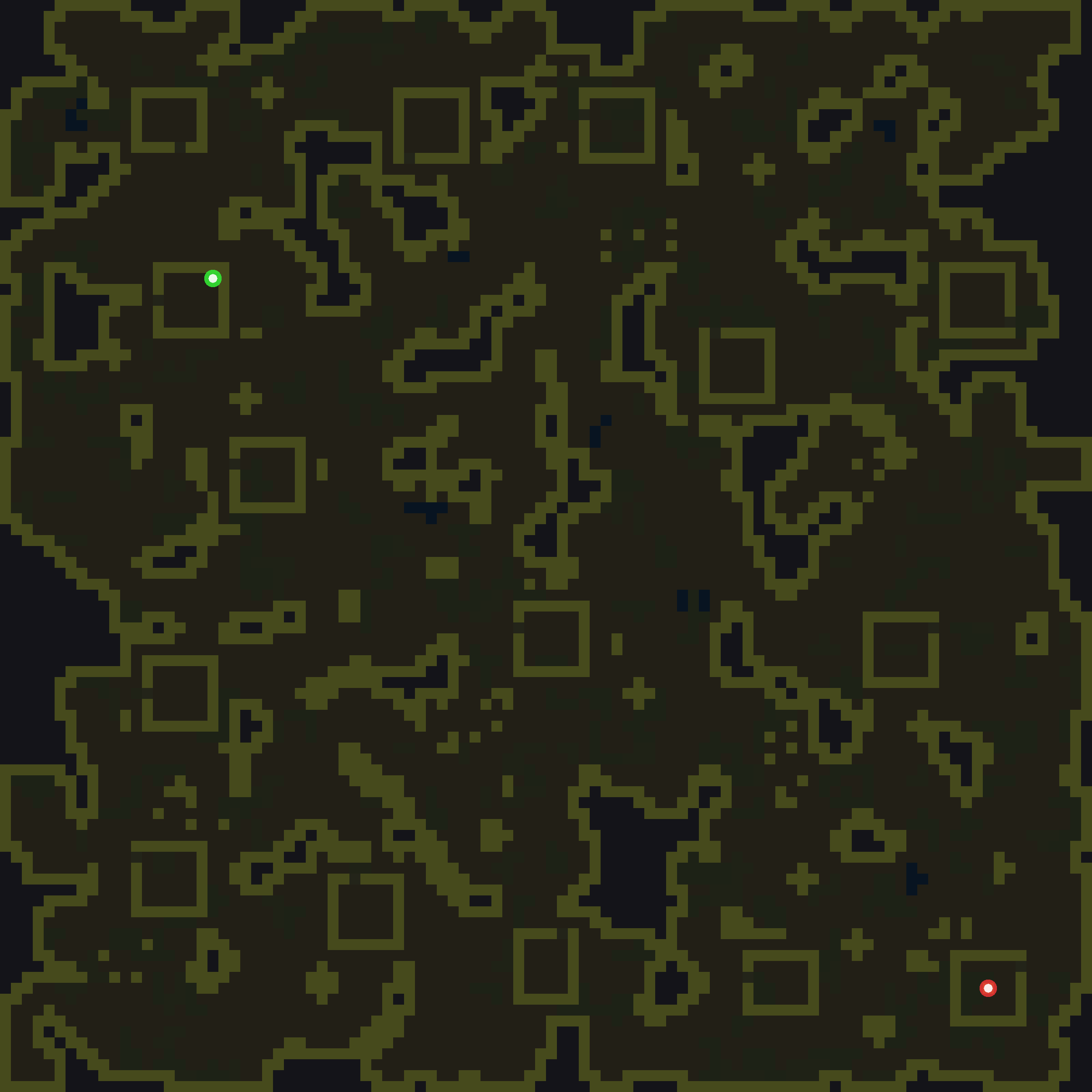
The individual generators in compass (the arroyos and rivers, the caverns and meanders) are the fun part to show off, but they aren’t what makes the library usable. The part I’m actually proud of is the composition layer that sits on top, and it owes a lot to the runtime pipeline patterns I wrote about a while ago. Shapes times features Every room is described as a shape combined with a feature. There are 24 shapes: squares and circles, but also blobs, crystalline caverns, crescents, capsules, and a handful of hallway types. There are 18 features: pillars, islands, stepping stones, pools, moats, chasms, rubble, and four kinds of river. Any shape can pair with any feature, which is 432 distinct room configurations before you’ve placed a single one. A feature is just two functions: an initialize step that works out the geometry (the meandering river feature, for example, generates a sine-wave centerline and expands around it), and a content step that decides the terrain type for each tile inside the shape. Keeping those two responsibilities separate is what lets the same river feature drop into a square room or an L-shaped hallway without caring which it landed in. ...

October 13, 2024 · 3 min

Caverns, Automata and the Meander Revisited

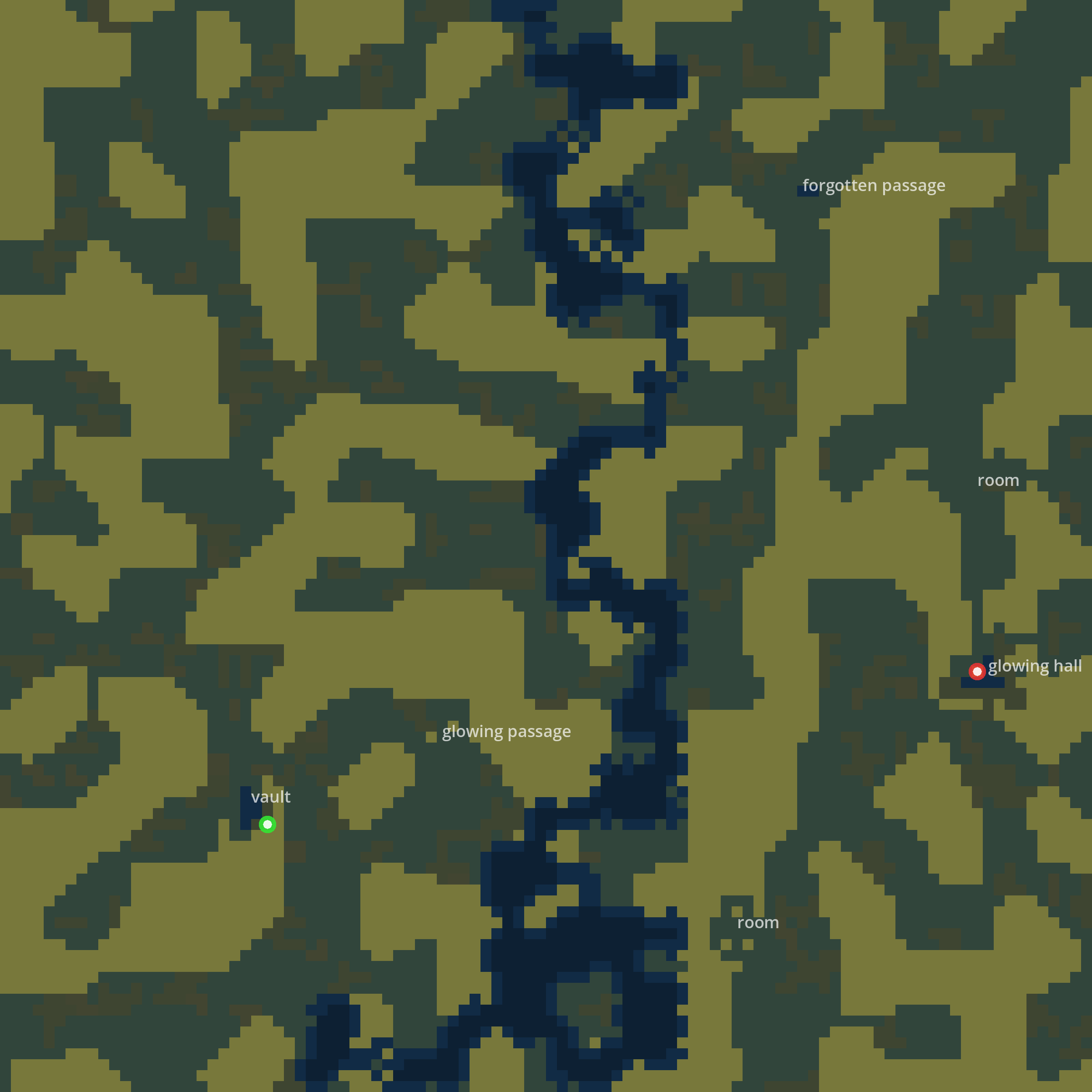
Back in 2015 I tackled automata generated caverns for a 7DRL, and in 2018 I wrote up the meander algorithm for rivers. Both made it into compass and both got a little sharper along the way, so I wanted to revisit them with the actual implementations in hand. Caverns The cavern generator is Conway’s Game of Life pointed at a terrain problem. It’s almost embarrassing how little code it takes. Clone the map and randomly seed roughly 55% of it as floor. Run a single Game of Life pass over the Moore neighborhood (the 8 surrounding cells). An empty cell is born as floor with 5 or more floor neighbors, and an existing floor cell survives with 4 or more. clipOrphaned keeps only the largest connected blob so you don’t get a dozen disconnected pockets. Build walls around everything walkable and force the map border to wall so the cave is sealed. One pass is enough. The birth and survival thresholds are doing the smoothing that I used to iterate several times to get, and the result is the lumpy organic cave you’d expect. ...

June 9, 2024 · 2 min

Carving Terrain Like Water

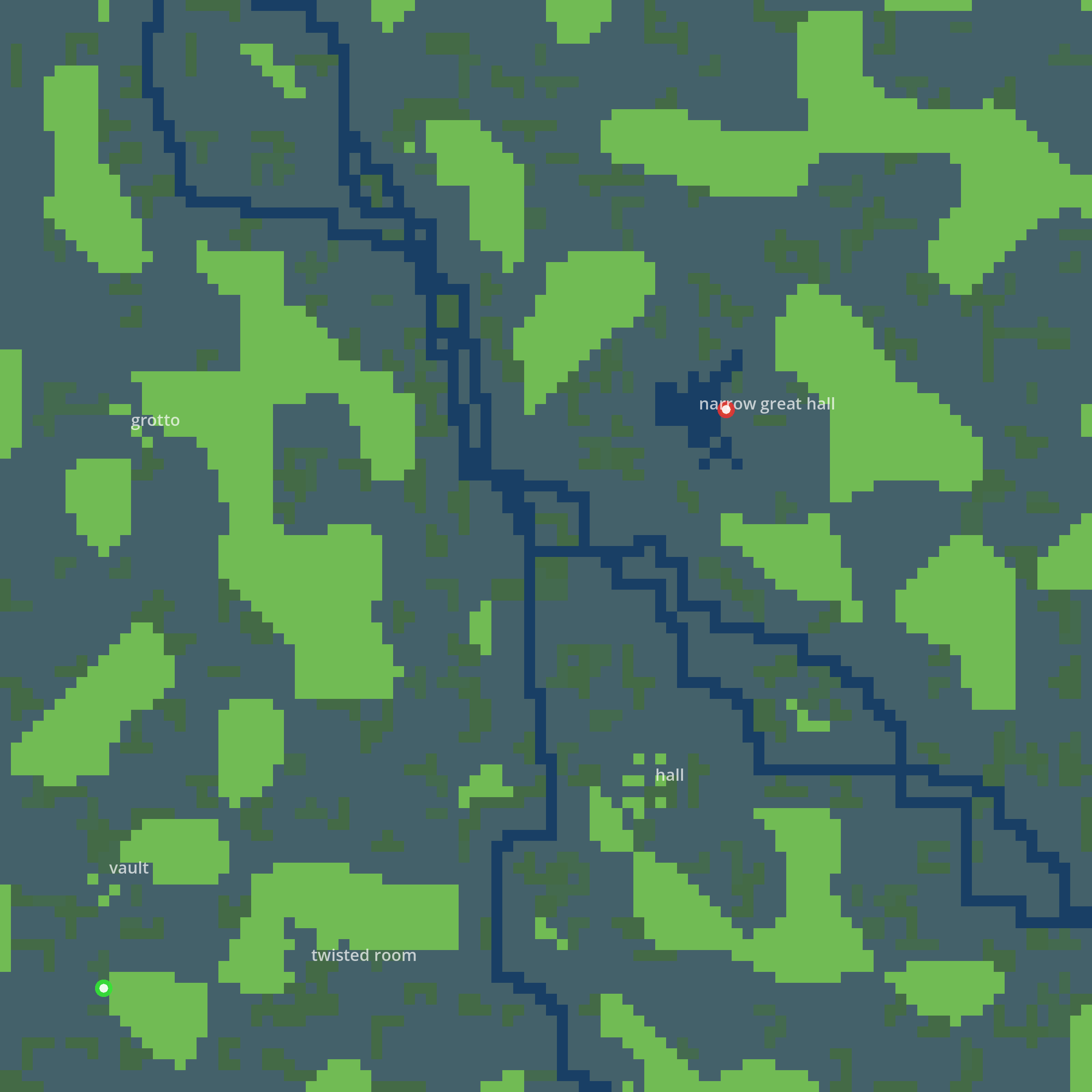
A few years back I wrote a handful of posts about faking water on top-down maps: generating 2d rivers, cliffs, and an exhumed river channel. Those one-off experiments eventually grew into a proper map library I’ve been maintaining called compass. Revisiting them now is fun because real-world geology already solved the “make it look natural” problem ages ago. I just borrow the names and loosely approximate the process. Here are three of the fluvial generators and how they actually work. ...

February 18, 2024 · 3 min